克服制造挑战的战略性紧固件解决方案
- 2025-12-26

The Great Debate: DIN 933 vs. DIN 931 – Why the "Shank" Matters More Than You Think
A deep dive into Full Thread vs. Partial Thread bolts, and how to choose the right one for your steel structure.
High Fasteners | Handan Factory | Premium Bolt Manufacturing
Table of Contents
Introduction ................................................................. 3
The Visual Difference: It's All About the "Grip" ................................ 4
Why Smart Engineers Love the "Shank" (DIN 931) ................................. 5
Why Does DIN 933 Even Exist? ................................................... 6
The Alignment Factor ........................................................... 7
Which One Should You Buy? ...................................................... 8
The "High Fasteners" Standard ................................................... 9
Conclusion .................................................................... 10
Introduction
You're staring at a Bill of Materials (BOM), and you see two line items that look suspiciously similar: DIN 933 and DIN 931. Both are Hex Head Bolts. Both are likely Grade 8.8 or 10.9. They probably even cost about the same.
So, does it really matter which one you pick? Can't you just grab a handful of fully threaded bolts and call it a day?
Well, you could. But if you are building something that needs to handle serious shear forces—like a heavy steel frame or an automotive chassis—that "lazy" choice might come back to haunt you.
Let's cut through the technical jargon and talk about what's actually happening inside the joint.
The Visual Difference: It's All About the "Grip"
First off, let's get the obvious out of the way.
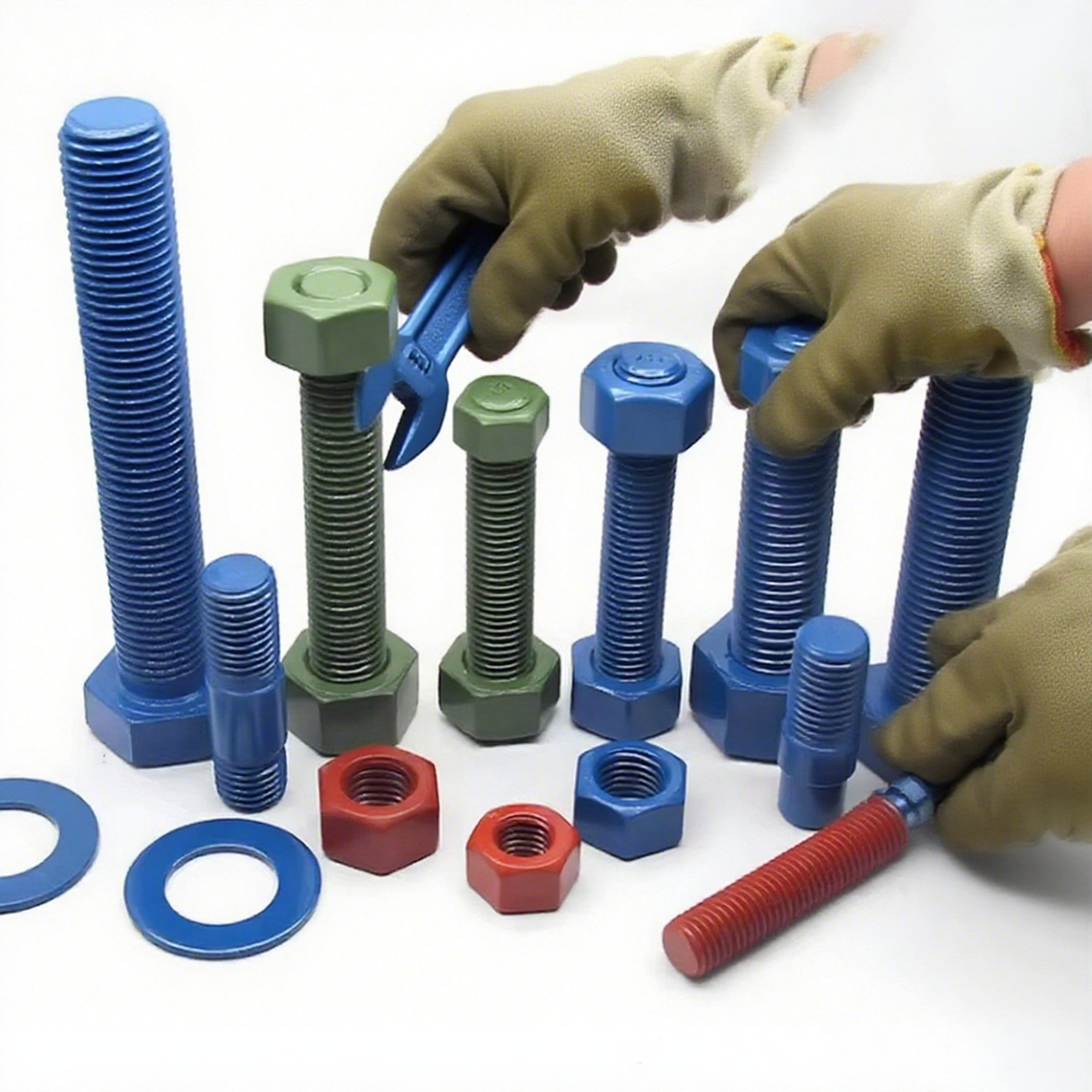
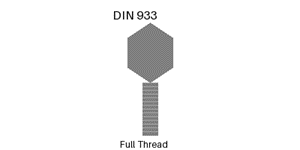 | 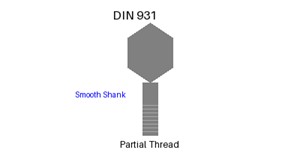 |
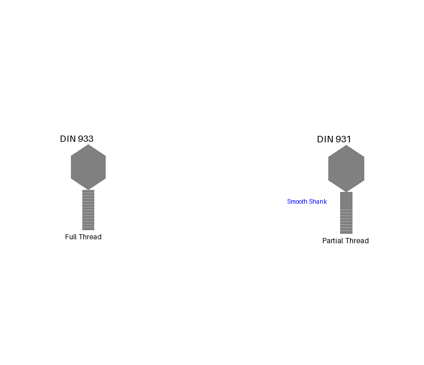
Figure 1: Visual Comparison of DIN 933 (Full Thread) and DIN 931 (Partial Thread) Bolts
| DIN 933 (Full Thread) | DIN 931 (Partial Thread) |
| Threads run from tip to hex head | Smooth, unthreaded "Shank" under head |
| No grip length section | Has defined grip length |
It seems like a minor manufacturing detail, right? Actually, that smooth shank changes everything about how the bolt carries a load.
Why Smart Engineers Love the "Shank" (DIN 931)
Imagine you are bolting two heavy steel plates together. When those plates try to slide past each other (that's Shear Force), they are slicing against the side of the bolt.
If you use a fully threaded DIN 933, those steel plates are grinding against the threads.
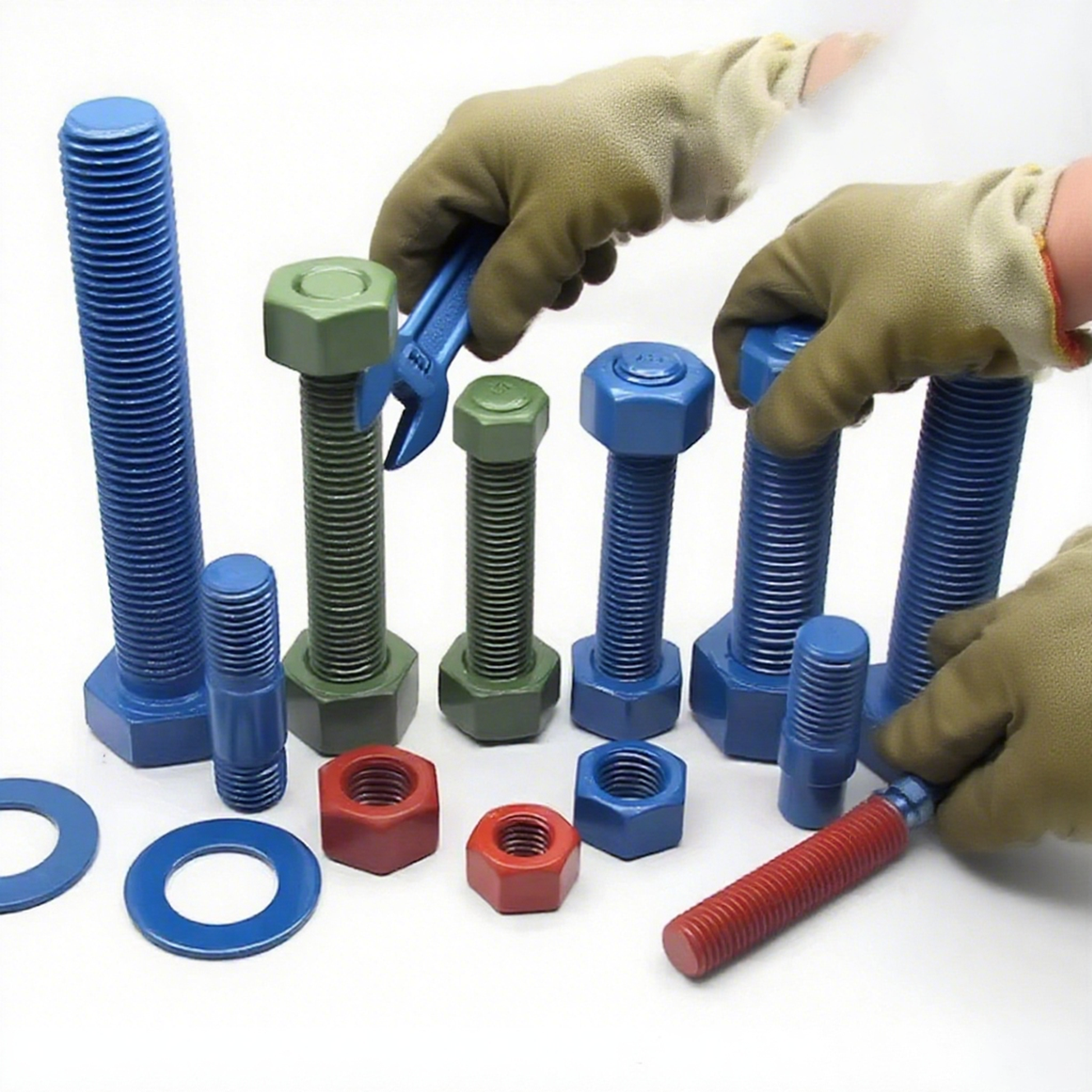
Figure 2: Shear Force Comparison Between DIN 933 and DIN 931
Here is the problem: Threads create stress risers. They are essentially weak points. The diameter of the "root" (the bottom of the thread groove) is significantly smaller than the nominal diameter of the bolt. So, a 12mm bolt might only have 10mm of solid steel fighting that shear force.
Enter the DIN 931.
Because it has that smooth, solid shank, you can position the bolt so that the shear plane (where the plates meet) sits right on the solid steel body, not on the threads.
It acts like a solid steel dowel pin. It's stronger, stiffer, and less likely to deform under heavy load.
Why Does DIN 933 Even Exist?
You might be thinking, "If DIN 931 is stronger, why do we sell millions of DIN 933s at High Fasteners?"
Two reasons: Versatility and Grip Range.
With a partially threaded bolt (DIN 931), you have a limit. If the nut hits the end of the threads before it tightens down on the material, you're in trouble. You've run out of thread. This happens if you buy a bolt that's too long for a thin plate.
DIN 933 doesn't care. Since the threads go all the way up, you can tighten the nut anywhere. You can use a 100mm bolt to clamp a 10mm plate (though it would look ridiculous sticking out). For distributors and maintenance shops, stocking DIN 933 is safer because it fits more situations, even if it's not mechanically perfect for all of them.
The Alignment Factor
There's another subtle benefit to the DIN 931 that mechanics appreciate.
When you are trying to line up holes in two heavy components, putting a fully threaded bolt through can be a nightmare. The threads catch on the edges of the holes. They scrape the paint. They get damaged.
The smooth shank of a DIN 931 allows you to use the bolt almost like an alignment tool. It slides through the holes smoothly until the threads engage on the other side. It saves time, and honestly, it saves your knuckles.
Which One Should You Buy?
At High Fasteners, we manufacture tons of both every month in our Handan factory. We don't play favorites, but we do want your project to be safe.
| Choose DIN 933 (Full Thread) If: | Choose DIN 931 (Partial Thread) If: |
| You aren't sure about the exact thickness of the materials you are clamping. | You are building structural steel framework (bridges, buildings). |
| The load is primarily Tensile (pulling the bolt apart length-wise), not Shear. | The joint will face heavy Shear Loads or vibration. |
| You are screwing the bolt into a tapped hole (like an engine block) rather than using a nut. | You need the bolt to act as a pivot point or an alignment pin. |
The "High Fasteners" Standard
Whether you need the versatility of 933 or the shear strength of 931, quality is non-negotiable. A bad bolt is a bad bolt, regardless of its thread length.
At our facility, we don't just form the heads and roll the threads. We run them through Optical Sorting Machines. We check the thread pitch, the head dimensions, and the shank straightness.
Why? Because when you are tightening a Grade 10.9 bolt to its limit, you need to know it's not going to snap.
Conclusion
Still not sure which DIN standard fits your BOM?
Don't guess. Send your drawing or project requirements to our engineering team. We'll help you pick the right "steel muscle" for the job.
[Download our full Bolt Specification Catalog PDF here]
Contact Us:
Web: www.highfasteners.com
Email: admin@changhua-electrical.com